
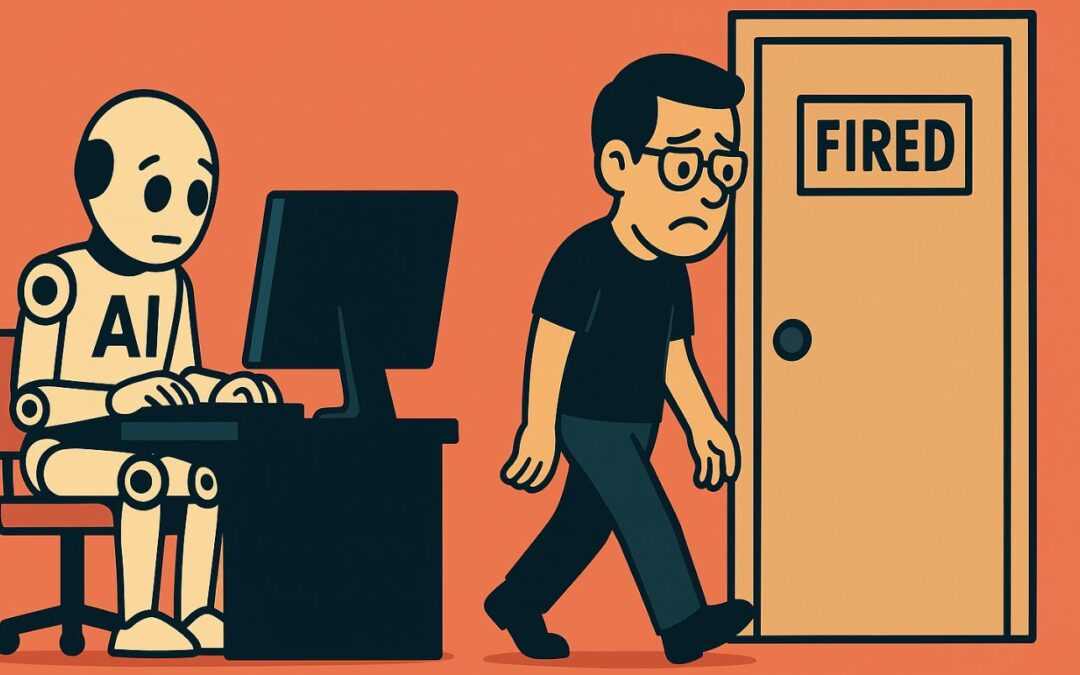
https://malaka555.sg-host.com/ – A new study from Microsoft has brought fresh attention to the growing debate around artificial intelligence (AI) and the labor market. The report identifies 40 job categories that are most vulnerable to being replaced or significantly reshaped by AI-driven tools. This revelation comes at a time when businesses across industries are racing to adopt automation and machine learning to cut costs and increase efficiency.
The study emphasizes that while AI has the potential to streamline repetitive tasks and boost productivity, it could also disrupt traditional employment structures. According to the findings, jobs that involve predictable patterns, large amounts of data processing, or basic content generation face the highest risks of automation.
Occupations Facing the Greatest Threat
The research outlines a broad range of jobs that are particularly exposed to AI replacement. These include administrative roles such as data entry clerks, payroll officers, and call center representatives. Creative industries are also highlighted, with content writers, translators, and graphic designers facing increasing competition from AI-powered tools capable of generating text, audio, and visuals with minimal human input.
In addition, technical support positions and roles in financial services, such as junior analysts and loan processors, are deemed highly susceptible. These jobs often involve repetitive decision-making that machine learning algorithms can replicate faster and more accurately. While high-level strategic work still requires human oversight, many entry-level or task-driven roles could soon be at risk.
Potential Shifts in the Global Job Market
The Microsoft study suggests that AI could dramatically reshape the global job market over the next decade. While some jobs may disappear, others will evolve, requiring employees to acquire new skills to remain competitive. For example, customer service may shift from manual responses to AI-assisted systems, where human workers handle only complex or sensitive inquiries.
At the same time, the report highlights that new categories of employment will emerge as AI continues to advance. Demand is expected to grow in areas such as AI system training, ethics and compliance monitoring, and human-AI collaboration management. This suggests that the rise of AI, rather than simply eliminating jobs, could create opportunities for reskilling and workforce transformation.
Calls for Policy and Workforce Adaptation
Experts argue that governments, businesses, and educational institutions must take proactive steps to address these changes. Policies that promote upskilling, digital literacy, and lifelong learning will be essential to prepare workers for the evolving employment landscape. Without such interventions, the gap between those who can adapt to AI-driven industries and those left behind could widen significantly.
Microsoft’s findings also raise ethical questions about fairness and inclusion. If automation disproportionately affects lower-income and entry-level workers, the economic and social consequences could be severe. Balancing innovation with social responsibility will therefore be one of the greatest challenges for policymakers and business leaders in the coming years.